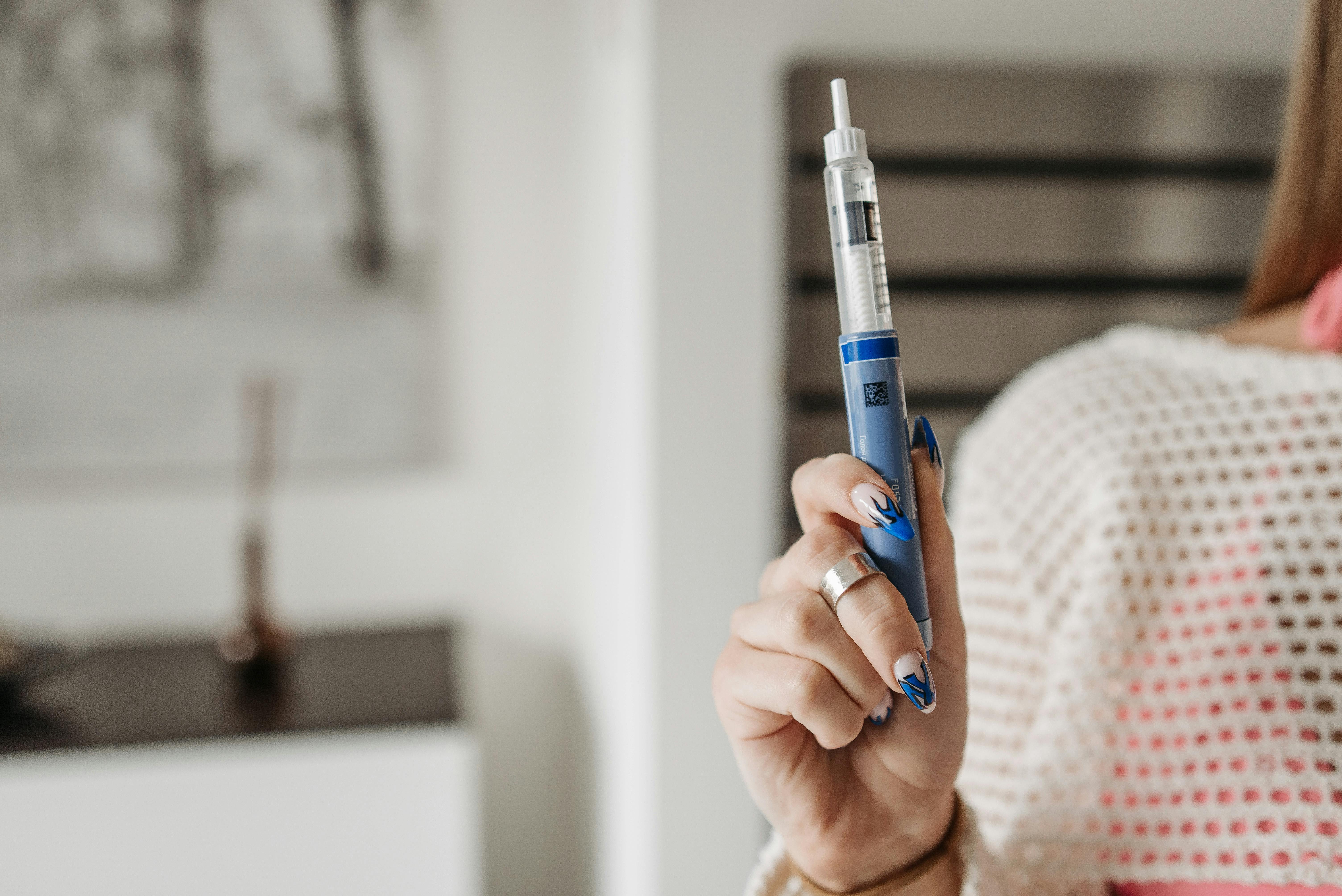
Ozempic is the most widely prescribed GLP-1 medication in Canada and the brand most Canadians have heard of. It is approved by Health Canada for type 2 diabetes, prescribed off-label for weight management at the discretion of the clinician, and now joined by the first two generic versions of semaglutide that Health Canada approved in late April and early May 2026.
This guide covers what Ozempic is, how it works, the clinical trial evidence, dosing, eligibility, what to expect, side effects, real-world cost in Canada, provincial coverage, the new generics, and how Ozempic compares to Wegovy and Mounjaro. Specific topics like cost, side effects, and prescription access have their own dedicated pages, linked throughout.
What Is Ozempic (Semaglutide)?
Ozempic is the brand name for semaglutide, a glucagon-like peptide-1 (GLP-1) receptor agonist made by Novo Nordisk. Health Canada approved Ozempic on February 22, 2018 for adults with type 2 diabetes, used to improve glycemic control as an adjunct to diet and exercise. The cardiovascular risk-reduction indication (for adults with type 2 diabetes and established heart disease) was added later, based on the SUSTAIN-6 outcomes trial. Ozempic is delivered as a once-weekly subcutaneous injection from a pre-filled pen. [1][4]
Ozempic, Wegovy, and Rybelsus all contain the same active ingredient (semaglutide) but at different doses and for different indications. Ozempic is dosed at 0.25 mg, 0.5 mg, 1 mg, or 2 mg weekly for type 2 diabetes. Wegovy is dosed at 2.4 mg weekly for chronic weight management. Rybelsus is the oral tablet form. The molecule is identical across all three; the dose, formulation, and approved use differ.
Generic Ozempic Is Now Approved in Canada
Novo Nordisk's data exclusivity for semaglutide expired on January 4, 2026 and the Canadian patent covering the molecule has lapsed. Health Canada has now approved two generic semaglutide products: Dr. Reddy's Laboratories on April 28, 2026 (the first approval, making Canada the first G7 country to clear a generic semaglutide) and Apotex's Apo-Semaglutide Injection on May 1, 2026 (the first Canadian-made generic). Seven additional generic submissions are still under Health Canada review. [2][3]
Pharmacy availability for both approved generics is expected by May 29, 2026. Once three or more generics are on the market, monthly out-of-pocket costs are projected to fall to roughly $100 to $150 per month under Canada's generic pricing framework, compared to the $253 to $310 patients pay today for brand-name Ozempic.
For the full timeline, manufacturer details and what this means for coverage, see our generic semaglutide in Canada guide.
Generic Semaglutide at In-Person Canadian Pharmacies
Cash retail prices for generic semaglutide at Canadian pharmacies are now coming in below the telehealth alternatives, based on early Canadian consumer reports. Costco Pharmacy is the lowest reliable option at roughly $88 to $99 per month (confirmed pickups: $88.88 GTA, $88 Ontario, $99 Laval, $91 Medicine Hat). Walmart and Loblaws No Frills typically come in around $95 to $110 per month. Shoppers Drug Mart, Rexall and London Drugs are running roughly $100 to $120 per month (one Halifax-area Shoppers fill reported $113 for the 0.25mg starter dose). Apotex's Apo-Semaglutide Injection began shipping to Canadian pharmacies on May 20, 2026, while Dr. Reddy's generic, which also launched in May 2026, has been off the market since an August 2026 recall.
That makes in-person pharmacies — especially Costco — meaningfully cheaper than telehealth providers for generic semaglutide. Felix Health and Hims Canada both list $149 per month all-in for the same generic Apo-Semaglutide on their public pricing pages. For most Canadians with a valid prescription, walking it into a local pharmacy is now the cheapest reliable path.
Pricing context: per the Globe and Mail, Apotex's published wholesale price is $78.14 for a four-week supply — roughly one-third of brand-name Ozempic's $240.48 wholesale price. Retail estimates above reflect that wholesale plus each chain's standard dispensing fee and markup. See also coverage from CBC News on the Canadian launch. Under the pan-Canadian Pharmaceutical Alliance framework, the maximum public drug plan price for generic semaglutide is approximately $114 per four-week supply with two manufacturers approved, dropping to roughly $80 once a third manufacturer launches.
How Ozempic Works
Semaglutide mimics the natural hormone GLP-1, which is released from the small intestine after eating. By activating GLP-1 receptors throughout the body, Ozempic produces several therapeutic effects:
- Lowers blood sugar: Stimulates insulin release from the pancreas when blood glucose is high, and suppresses glucagon (the hormone that raises blood sugar).
- Slows gastric emptying: Food stays in the stomach longer, which both stabilizes post-meal blood sugar and increases the feeling of fullness.
- Reduces appetite: Acts on receptors in the brain (particularly the hypothalamus) to reduce hunger and food cravings. Many patients describe a quieting of "food noise".
- Cardiovascular protection: Demonstrated reduction in major adverse cardiovascular events in patients with type 2 diabetes and established heart disease.
Semaglutide has a half-life of about 7 days, which is why a single weekly injection produces stable drug levels in the blood. The slow onset and steady-state pharmacokinetics also explain why patients titrate up gradually over months rather than starting at the full dose. [1]
SUSTAIN Trial Results: Diabetes Outcomes
Ozempic's approval for type 2 diabetes was based on the SUSTAIN clinical trial program, a large set of randomized, double-blind, placebo and active-controlled studies. The headline results from key SUSTAIN trials at the 1.0 mg weekly dose:
| Trial | Comparison | HbA1c Reduction | Weight Loss |
|---|---|---|---|
| SUSTAIN 1 | vs placebo (drug-naive T2D) | 1.5% | 4.5 kg |
| SUSTAIN 2 | vs sitagliptin (added to metformin) | 1.4% | 4.3 kg |
| SUSTAIN 3 | vs exenatide ER (added to oral agents) | 1.5% | 5.6 kg |
| SUSTAIN 6 | vs placebo (CV outcomes) | 1.1% | 4.9 kg |
| SUSTAIN 7 | vs dulaglutide (head-to-head) | 1.8% | 6.5 kg |
SUSTAIN-6 was the cardiovascular outcomes trial, enrolling 3,297 patients with type 2 diabetes and established cardiovascular disease or chronic kidney disease. Over a median follow-up of 2.1 years, semaglutide reduced major adverse cardiovascular events (heart attack, stroke, or cardiovascular death) by 26% compared to placebo (hazard ratio 0.74, 95% CI 0.58 to 0.95). Nonfatal myocardial infarction occurred in 2.9% of patients on semaglutide versus 3.9% on placebo; nonfatal stroke in 1.6% versus 2.7%. This trial is the basis for the cardiovascular risk-reduction indication on the Ozempic Canadian label. [4]
SUSTAIN 7 directly compared semaglutide to dulaglutide (Trulicity) and showed superior glycemic control and weight loss with semaglutide. This contributed to Ozempic becoming the most prescribed GLP-1 in Canada. [5]
Ozempic Dosing Schedule
Ozempic uses a stepwise titration to minimize gastrointestinal side effects. Patients do not start at a therapeutic dose.
| Period | Dose | Purpose |
|---|---|---|
| Weeks 1 to 4 | 0.25 mg weekly | Starter dose; not therapeutic, used to acclimate the GI system |
| Weeks 5 to 8 | 0.5 mg weekly | First therapeutic dose; sufficient for some patients |
| Weeks 9 onward | 1.0 mg weekly | Standard maintenance dose |
| If needed | 2.0 mg weekly | Maximum dose; for patients needing additional glycemic control |
Each dose comes in a multi-dose pre-filled pen. Inject once per week, on the same day each week, at any time of day, with or without food. Inject into the abdomen, thigh, or upper arm, rotating sites each week.
If you miss a dose, take it as soon as possible within 5 days. If more than 5 days have passed, skip that week and take your next dose on the regular day. Do not double up. [1]
Who Qualifies for Ozempic in Canada?
Health Canada‐approved indication: Adults with type 2 diabetes mellitus to improve glycemic control as an adjunct to diet and exercise. Also indicated to reduce the risk of major adverse cardiovascular events in adults with type 2 diabetes and established cardiovascular disease.
Off-label use for weight loss: Ozempic is not approved by Health Canada for chronic weight management (Wegovy is the approved semaglutide brand for that indication). However, many Canadian clinicians prescribe Ozempic off-label for weight loss when Wegovy is unavailable, when insurance covers Ozempic but not Wegovy, or based on individual clinical judgment. Off-label prescribing is legal in Canada.
Contraindications: Personal or family history of medullary thyroid carcinoma, Multiple Endocrine Neoplasia syndrome type 2, history of pancreatitis, severe gastrointestinal disease (including gastroparesis), pregnancy or planned pregnancy within 2 months, or breastfeeding. [1]
What to Expect Month by Month
Month 1 (0.25 mg starter): Most patients tolerate the starter dose well. Mild nausea is common, especially after meals. About 10 to 15 percent of patients report some stomach discomfort. Appetite reduction usually begins within the first 1 to 2 weeks. Weight loss at this stage is modest, typically 1 to 2 kg.
Month 2 (0.5 mg): First therapeutic dose. Nausea often peaks for 1 to 2 weeks after the dose change, then settles. Blood sugar improvements become measurable. Weight loss accelerates for many patients. HbA1c improvements are usually visible at the 3-month follow-up.
Months 3 to 4 (1.0 mg maintenance): Another wave of nausea is common when stepping up. By the 12 to 16 week mark, most patients report side effects have settled significantly. About 3 to 5 percent of patients cannot tolerate this dose and step back to 0.5 mg.
Beyond month 4: Most side effects are mild or have resolved. Decreased appetite typically persists, which is part of the therapeutic effect. Some patients continue to experience occasional constipation. The 2.0 mg dose is added if needed for additional glycemic control.
Side Effects Overview
From the SUSTAIN trials at 1.0 mg, the most common adverse reactions are gastrointestinal: nausea (about 20 percent), diarrhea (8 to 10 percent), vomiting (5 to 9 percent), constipation (5 to 7 percent), abdominal pain (5 to 7 percent), and decreased appetite (6 to 9 percent, often a desired effect). [1]
Serious but rare side effects include pancreatitis (less than 1 percent), gallbladder disease (1 to 3 percent, often related to rapid weight loss), kidney concerns from dehydration, hypoglycemia (uncommon when used alone but more common with insulin or sulfonylureas), and a boxed warning about thyroid C-cell tumors based on rodent studies. Ozempic is contraindicated in patients with a personal or family history of medullary thyroid carcinoma.
For full management strategies, when to call your doctor, and a side effect comparison vs other GLP-1 medications, see our Ozempic side effects guide.
Cost and Insurance Coverage
Brand-name Ozempic costs roughly $253 to $310 per month at most Canadian pharmacies, plus a dispensing fee of $4 (Costco) to $12 (major chains). The recently approved generics from Dr. Reddy's and Apotex are projected to be priced under Canada's generic pricing framework: roughly $190 to $233 with one generic on market, $127 to $155 with two, and $89 to $109 once three or more generics are available.
Every Canadian provincial drug plan lists Ozempic for type 2 diabetes, but every listing requires Special Authority, Limited Use, Exception Drug Status, or similar approval before the plan will pay. The criteria typically include a confirmed type 2 diabetes diagnosis and HbA1c above target on metformin (or metformin contraindicated). For weight loss alone, no province covers Ozempic under public drug plans. [6]
Private insurance through employers (Sun Life, Manulife, Canada Life, Blue Cross, Desjardins, Green Shield) typically covers Ozempic with prior authorization. Step therapy (try metformin first) is common.
For full pricing breakdowns by dose and pharmacy, see Ozempic cost in Canada. For provincial coverage criteria and Special Authority application steps, see Ozempic insurance coverage in Canada.
Ozempic for Weight Loss
Although Ozempic is not approved for weight management in Canada, the SUSTAIN trials showed average weight loss of 4 to 6 kg at the 1.0 mg dose in patients with type 2 diabetes. At higher doses (1.7 mg or 2.0 mg) and in patients without diabetes, the weight loss is closer to 8 to 10 percent of baseline body weight, though still less than the 14 to 15 percent seen with Wegovy 2.4 mg. [7]
Many Canadian clinicians prescribe Ozempic off-label for weight loss when:
- Wegovy is unavailable due to supply shortages
- The patient has a comorbidity such as prediabetes or insulin resistance that supports the rationale
- Insurance covers Ozempic for diabetes but not Wegovy for weight management
- The patient prefers the lower starting dose for tolerability
Off-label use is legal but means insurance coverage typically requires a diabetes diagnosis. Patients without diabetes who use Ozempic for weight loss generally pay full retail price out of pocket.
Ozempic vs Wegovy vs Mounjaro
Ozempic, Wegovy, and Mounjaro are the three GLP-1 (or GLP-1 plus GIP) medications most commonly discussed in Canadian weight and diabetes care. Here is how they line up:
| Factor | Ozempic (semaglutide) | Wegovy (semaglutide 2.4 mg) | Mounjaro (tirzepatide) |
|---|---|---|---|
| Manufacturer | Novo Nordisk | Novo Nordisk | Eli Lilly |
| Mechanism | GLP-1 agonist | GLP-1 agonist | Dual GIP + GLP-1 agonist |
| Approved for | Type 2 diabetes (CV protection) | Chronic weight management | Type 2 diabetes (weight management approved) |
| Maintenance dose | 1 mg or 2 mg weekly | 2.4 mg weekly | 5 mg to 15 mg weekly |
| Average weight loss | 6% to 8% | 14.9% (STEP 1) | 22.5% (SURMOUNT-1) |
| Monthly cost (brand) | $253 to $310 | $376 to $493 | $326 to $650 |
| Generic available | Yes (approved May 2026) | No | No |
| Provincial coverage | All 10 provinces (T2D only) | 3 provinces (restricted) | 3 provinces (T2D only) |
On weight loss alone, Mounjaro currently leads. On cardiovascular evidence and diabetes coverage, Ozempic has the deepest data. On price (especially after generics), Ozempic is and will remain the cheapest of the three. [8] For full breakdowns: Wegovy guide and Mounjaro guide.
Online Providers Cost Comparison
Most Canadians now access Ozempic through telehealth providers rather than in-person clinics. Below is how the main Canadian online providers compare for Ozempic prescribing, with BirchRx our highest-rated provider in Ontario, BC, Alberta and Saskatchewan, and MyRocky our pick everywhere else.
| Provider | Ozempic Monthly Cost | Consultation Fee | Coverage | Learn More |
|---|---|---|---|---|
| BirchRx (top pick) | Generic semaglutide: $149 first month, then $199 | Free assessment, pay only if approved | ON, BC, AB and SK only | Visit BirchRx |
| MyRocky | Generic $149 + $60/mo fee / Brand from $200 | $99 one-time (includes lab work and first prescription) | All 10 provinces (including QC and NB) | Visit MyRocky |
| Felix Health | Brand $149/pen / Generic $149/pen | Free (first), $40 follow-up | All provinces except QC and NB | Visit Felix |
| Maple | Via pharmacy | $69 one-time | All provinces + territories | Visit Maple |
| Hims Canada | From $149 | Included in plan | ON, BC, AB (expanding 2026) | Visit Hims |
| Jill Health | Pricing on assessment | Pricing on assessment | Select provinces | Visit Jill |
| DooU | Pricing on assessment | $45 one-time | All provinces + territories | Visit DooU |
| Raven | Pricing on assessment | Pricing on assessment | 9 provinces | Visit Raven |
BirchRx is our top-rated Canadian GLP-1 provider in Ontario, British Columbia, Alberta and Saskatchewan in 2026 (9.5/10). The assessment is free and you pay nothing unless a Canadian physician approves you, so month one is $149 and ongoing months are $199, with everything included. BirchRx prescribes generic semaglutide, the same active ingredient as Ozempic. BirchRx is a paid sponsor of this site. Read our full BirchRx review.
MyRocky is our top-rated Canadian GLP-1 provider outside Ontario, BC, Alberta and Saskatchewan in 2026 (9.1/10). MyRocky operates its own LegitScript-certified pharmacy in Mississauga, employs Canadian-licensed MDs, nurse practitioners and pharmacists, and serves all 10 provinces (including Quebec and New Brunswick where Felix and Hims do not). The $99 one-time consultation includes lab work and the first prescription. Read our full MyRocky review.
Frequently Asked Questions
Is Ozempic the same as Wegovy?
Same active ingredient (semaglutide), different doses, different approved uses. Ozempic is approved for type 2 diabetes at doses up to 2 mg weekly. Wegovy is approved for chronic weight management at 2.4 mg weekly. The molecule is identical. The branded products and indications are not.
Will generic Ozempic be cheaper?
Yes. Health Canada approved generic semaglutide from Dr. Reddy's on April 28, 2026 and from Apotex on May 1, 2026. Apotex's generic is in Canadian pharmacies now; Dr. Reddy's has been off the market since an August 2026 recall. Once three or more generics are on the market, prices are projected to fall to roughly $100 to $150 per month, well below the current brand price. See our generic semaglutide guide for the full picture.
How much does Ozempic cost per month in Canada without insurance?
Ozempic costs $253 to $310 per month at most Canadian pharmacies depending on dose, plus a dispensing fee of $4 to $12. Costco Pharmacy is consistently the cheapest option in Canada (no membership required). Patients on the 1 mg maintenance dose typically pay $290 to $340 before any insurance or pharmacy savings.
Is Ozempic covered by provincial drug plans?
Yes for type 2 diabetes, with restrictions. Every provincial drug plan lists Ozempic, but each requires Special Authority, Limited Use, or equivalent approval before the plan will pay. Typical criteria: confirmed type 2 diabetes plus HbA1c above target despite metformin (or metformin contraindicated). For weight loss alone, no province covers Ozempic under public drug plans.
Can I take Ozempic for weight loss in Canada?
Yes, with caveats. Ozempic is not approved for weight management in Canada (Wegovy is the approved semaglutide brand for that indication), but Canadian clinicians can prescribe it off-label. Off-label prescribing is legal. Insurance coverage typically requires a diabetes diagnosis, so patients using Ozempic for weight loss without diabetes generally pay full retail.
How long do Ozempic side effects last?
Most common side effects (nausea, diarrhea, abdominal pain) improve within 4 to 8 weeks of staying at a consistent dose. Each time you increase your dose, symptoms may temporarily return for 1 to 2 weeks. By 3 to 4 months on the maintenance dose, the majority of patients report minimal side effects.
Can my family doctor prescribe Ozempic?
Yes. Family physicians and nurse practitioners across Canada can prescribe Ozempic. For type 2 diabetes, prescribing is straightforward. For weight management, the conversation depends on your physician's comfort with off-label prescribing. If your family doctor is hesitant, telehealth providers like MyRocky, Felix, and Maple offer fast-tracked prescribing across most provinces. See how to get Ozempic in Canada for the full process.
Sources
- Novo Nordisk Canada Ozempic Product Monograph — Health Canada-approved product information including indications, dosing schedule, contraindications, and adverse reactions.
- Canada becomes the first G7 country to approve a generic version of semaglutide — Health Canada announcement, April 28, 2026. First G7 approval of a generic semaglutide product (Dr. Reddy's Laboratories).
- Canada approves second generic semaglutide, the first G7 country to do so — Health Canada announcement, May 1, 2026. Approval of Apotex's Apo-Semaglutide Injection (first Canadian-made generic).
- Marso SP, et al. Semaglutide and Cardiovascular Outcomes in Patients with Type 2 Diabetes (SUSTAIN-6) — NEJM 2016;375(19):1834-1844. Cardiovascular outcomes trial showing 26% MACE reduction in patients with T2D and established CV disease.
- Pratley RE, et al. Semaglutide vs Dulaglutide in Type 2 Diabetes (SUSTAIN 7) — Lancet Diabetes & Endocrinology 2018;6(4):275-286. Head-to-head trial showing superior HbA1c and weight loss with semaglutide vs dulaglutide.
- Diabetes Canada 2024 Clinical Practice Guidelines — Canadian clinical recommendations for GLP-1 receptor agonist use in type 2 diabetes.
- Wilding JPH et al. Once-Weekly Semaglutide in Adults with Overweight or Obesity (STEP 1) — NEJM 2021;384:989-1002. Pivotal trial supporting Wegovy weight-loss data (14.9% mean weight reduction at 68 weeks).
- Jastreboff AM et al. Tirzepatide Once Weekly for the Treatment of Obesity (SURMOUNT-1) — NEJM 2022;387:205-216. Pivotal Mounjaro/Zepbound trial showing up to 22.5% mean weight loss at the 15 mg dose over 72 weeks.